
BOPP stands for Biaxially Oriented Polypropylene — and that middle word, "oriented," is the whole story of how this tape gets its strength. Here's how a roll of tape actually comes together.
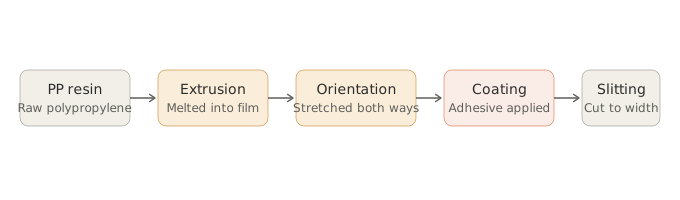
1. Polypropylene resin
It starts as raw polypropylene pellets — the same base plastic family used in countless packaging products. Quality of the resin here sets the ceiling for everything downstream; inconsistent resin leads to inconsistent film.
2. Extrusion
The resin is melted and extruded through a flat die into a continuous, still-soft film. At this stage it's just a plastic sheet — no strength characteristics yet, no adhesive.
3. Biaxial orientation
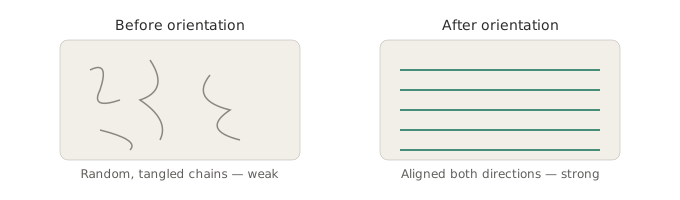
This is the step that makes BOPP what it is. The film is stretched in both directions — lengthwise and widthwise — while still warm. This realigns the polymer molecules, dramatically increasing tensile strength and clarity compared to unstretched film. It's the difference between a flimsy plastic sheet and a tape backing that can hold a carton shut under real handling stress.
4. Adhesive coating
Once the film is oriented and cooled, an adhesive layer is applied to one side — either acrylic (water-based, UV-stable, clean release) or hot-melt (solvent-free, higher initial tack, better for cold/damp surfaces). This is also where colour is introduced for brown or printed tape.

5. Slitting
The finished large "jumbo roll" of coated film is slit into the widths customers actually buy — 48mm, 72mm, and so on — and wound onto cores.
Why this process matters to you as a buyer
Every spec on a product page traces back to a step above:
- Micron thickness — set during extrusion and orientation.
- Clarity or colour — resin quality and any colour masterbatch added before extrusion.
- Adhesive performance (acrylic vs hot-melt) — the coating stage.
- Tensile/tear strength — largely determined by the orientation step; this is why "BOPP" tape reliably outperforms plain unoriented plastic tape at the same thickness.
A real-world example
Two rolls of tape can look nearly identical — same width, same claimed micron, same colour — and still perform differently on a busy packing line. The most common reason is inconsistency at the orientation and coating stages rather than a difference in the raw formula. A manufacturer with tighter process control produces film with more consistent tension and a more even adhesive coat across the roll, which is why sourcing from a consistent, quality-controlled manufacturer matters as much as the spec sheet itself — see Why Quality Tape vs Cheap for how this plays out in practice.
FAQ
Why does BOPP tape feel different from a cheap "cellotape"? The biaxial orientation step is the difference. Ordinary unoriented plastic tape hasn't had its polymer chains aligned in both directions, so it tears more easily and stretches unpredictably. BOPP's orientation process is what gives it the tensile strength and dimensional stability that makes it reliable for carton sealing.
Does the manufacturing process affect tape colour options? Yes — colour is typically introduced as a masterbatch either in the resin before extrusion (for solid colours) or as a print step after the film is oriented and coated (for printed/branded tape). See Types of BOPP Tape for how this connects to clear, brown, coloured, and printed variants.
Is there a quality difference between virgin and recycled-content BOPP film? Recycled-content film can have more variability in orientation consistency and clarity compared to virgin resin, which is part of why board and film quality both matter for consistent adhesion — this mirrors the board-quality point in the Troubleshooting Guide.
How long does the full manufacturing process take, roll to roll? This varies significantly by manufacturer and equipment, and isn't something PackGPT should state as a fixed number without checking a specific supplier's actual production data.
Want to know which spec fits your specific use case? Talk to PackGPT or check the Micron Guide.