
BOPP tape's colour isn't just cosmetic — each variant tends to map to a different use case.
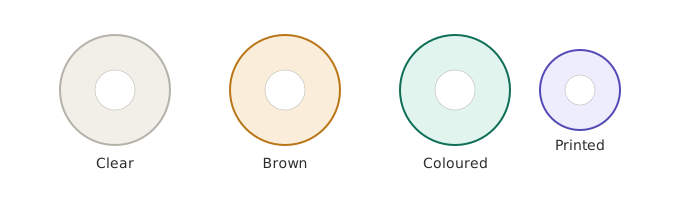
Clear tape
The most common general-purpose option. Used wherever the carton's own branding or labelling needs to stay visible, or where a "default" professional look matters. Clear tape is typically acrylic-based and is the standard choice for retail, ecommerce, and most B2B shipping unless there's a specific reason to use something else.
Brown tape
Functionally similar to clear tape but pigmented brown — available with either acrylic or hot-melt adhesive; the hot-melt variant is what export shippers and direct-rain-exposure routes typically pick (see the Monsoon Packaging Guide — monsoon season by itself doesn't require hot-melt). Brown tape also visually matches uncoated kraft cartons, which some businesses prefer for a natural, unbranded appearance.
Coloured tape
Available in a range of colours (yellow, red, green, blue, and others), coloured tape is mainly used for operational coding rather than sealing strength — colour-coding cartons by destination, priority, department, or product line in a warehouse. If your team needs to visually sort cartons quickly on a dock or in storage, coloured tape solves that without needing separate labels.
Printed tape
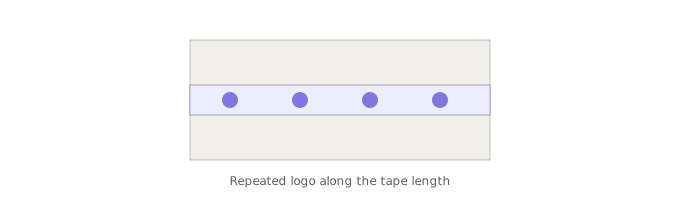
Custom-printed with a company logo, name, or warning text ("Fragile", "This Side Up"). Printed tape serves two purposes at once: it seals the carton and reinforces brand identity on every parcel that reaches a customer — increasingly common for D2C and ecommerce brands that treat the unboxing experience as part of their branding. See the Printed BOPP Tape for Branding guide for a deeper look at this.
Quick summary
| Type | Primary purpose | Common adhesive |
|---|---|---|
| Clear | General-purpose, keeps branding visible | Acrylic |
| Brown | General-purpose, export-friendly | Acrylic or hot-melt |
| Coloured | Warehouse/operational coding | Acrylic |
| Printed | Brand reinforcement + sealing | Acrylic or hot-melt |
A real-world example
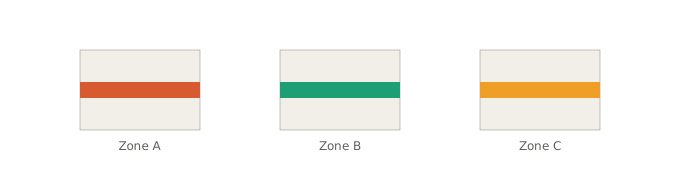
A distribution warehouse handling three regional zones switched from writing zone codes on cartons by hand to using three colours of tape — one per zone. Sorting time at the dispatch dock dropped noticeably because staff could visually route cartons at a glance instead of reading labels. This is a low-cost operational fix that's easy to overlook since coloured tape is usually thought of as a cosmetic choice rather than a warehouse-efficiency tool.
FAQ
Can I use coloured tape to seal a carton, or is it just for labeling? Coloured tape is genuine BOPP tape and can seal a carton the same way clear or brown tape does — the colour doesn't change its sealing performance. It's just less commonly used purely for sealing since clear/brown are the conventional defaults.
Does printed tape cost significantly more than plain tape? Yes, meaningfully more, since it requires a dedicated print run rather than stock production — see the Printed Tape guide for the MOQ and cost trade-off.
Can brown tape be printed too, or only clear? Printing is technically possible on both, though clear tape with a printed logo tends to give better print visibility and contrast than printing on brown.
Is there a "best" tape colour for hiding tampering? Printed tape with a repeated logo is generally considered the most tamper-evident option, since any attempt to remove and reapply plain tape is much less visually obvious than disrupting a printed pattern.
Need a custom print run or a specific colour for warehouse coding? Generate a quote or talk to PackGPT for a spec recommendation.