
BOPP tape doesn't have an aggressive expiry the way some adhesives do, but storage conditions do affect performance over time — especially for bulk-purchased stock.
What actually degrades tape in storage
- Direct sunlight / UV exposure — can gradually affect adhesive performance and cause the backing film to become brittle over long periods.
- Extreme heat — can soften the adhesive layer and cause rolls to "block" (stick to themselves) or deform.
- High humidity, long-term — can affect acrylic adhesive tack over extended storage, similar to the mechanism covered in the Monsoon Packaging Guide, but relevant here even for tape that hasn't been applied yet.
Recommended storage practice
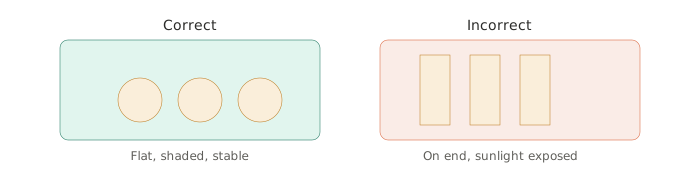
- Store rolls flat or on their side in original packaging, away from direct sunlight.
- Keep storage areas at moderate, stable temperature — avoid metal roofing/unshaded outdoor storage in peak summer.
- Rotate stock — use older rolls first (first-in, first-out), especially for bulk-purchased inventory.
- Avoid stacking heavy loads directly on top of tape rolls, which can deform the roll and affect unwind consistency.
Typical shelf life
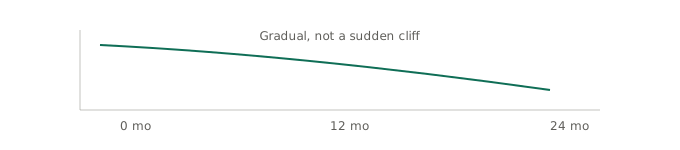
Under reasonable storage conditions, BOPP tape generally maintains good performance for 12–24 months. This isn't a hard cliff — performance degrades gradually rather than the tape suddenly "expiring" — but for bulk stock held longer than that, it's worth testing a roll before relying on it for a critical shipment.
A real-world example
A business that pre-purchased six months of tape inventory to lock in bulk pricing stored the rolls stacked three-high near a warehouse skylight. By month four, the top layer of rolls showed visibly reduced tack compared to rolls stored deeper in the stack, away from direct light — the sunlight exposure and heat buildup near the skylight were the cause, not the tape's age alone. Rotating stock away from that zone and reorganizing storage (flat, shaded, not stacked under direct light) resolved it for future purchases.
FAQ
Does stretch film have the same shelf life as tape? Similar but not identical — see the Stretch Film Storage guide for film-specific storage guidance, since film's stretch/cling properties respond somewhat differently to storage stress than tape adhesive does.
Is it safe to use tape that's been stored for over 2 years? It may still work, but performance is less predictable at that point — testing a roll on a non-critical carton before committing it to an important shipment is the safer approach rather than assuming it's fine or assuming it's unusable.
Does storage temperature matter more than humidity, or the other way around? Both matter, but for different reasons — heat primarily risks softening/deforming the roll and adhesive, while humidity primarily affects adhesive tack chemistry (see the Monsoon Guide for the humidity mechanism). A storage area that's both hot and humid compounds both risks.
Should I buy in bulk if I can't guarantee ideal storage conditions? Bulk buying can still make sense — just size the order to what you'll realistically use within 6–12 months rather than the full theoretical shelf life, to stay well within the range where performance is most reliable.
Buying in bulk and want guidance on storage-friendly packaging? Talk to PackGPT or generate a quote.